A Quiet-Shore Sketchbook: What to Notice Without Collecting
A quiet-shore sketchbook helps you record coastal shapes, textures and patterns in place, turning a gentle walk into attentive observation without taking anything.

The pencil stops above a curled shell, then moves to the notebook instead. A quiet-shore sketchbook is for noticing the coast without collecting from it: recording a curve, a colour boundary or the way wind has combed the surface, while leaving shells, stones, seaweed and driftwood where they lie.
This approach suits a visit with no grand destination. It asks for a little patience and a few simple materials, but no drawing skill. The page becomes a record of relationships in the landscape, rather than a catalogue of things removed from it.
A modest kit
Take a pocket sketchbook with paper that can tolerate a few pencil marks, a soft graphite pencil, and a small eraser. A clip or elastic band helps keep the pages from catching the breeze. If you like adding colour, a small set of coloured pencils is easier to manage on a shore than loose paints or water that could spill.
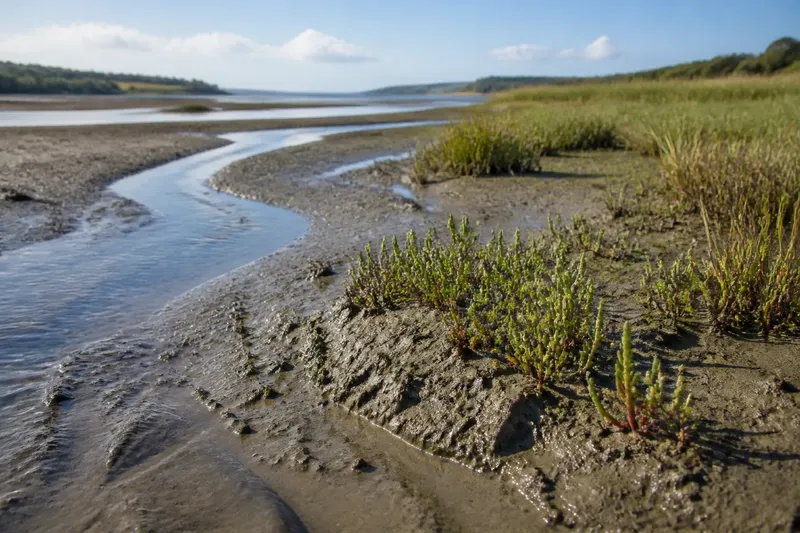
Keep the kit simple enough to carry in one hand. A phone may help with a permitted reference photograph, but it is not essential; the point is to look closely before reaching for a device. Avoid placing notebooks or equipment on fragile vegetation, salt-marsh plants or nesting areas. Choose a durable path or open, firm ground instead.
Before you begin, check local access signs and any restrictions on drawing, photography or entering protected areas. Leave living and non-living shore material in place, and do not disturb wildlife to improve a view.
Start with the whole view
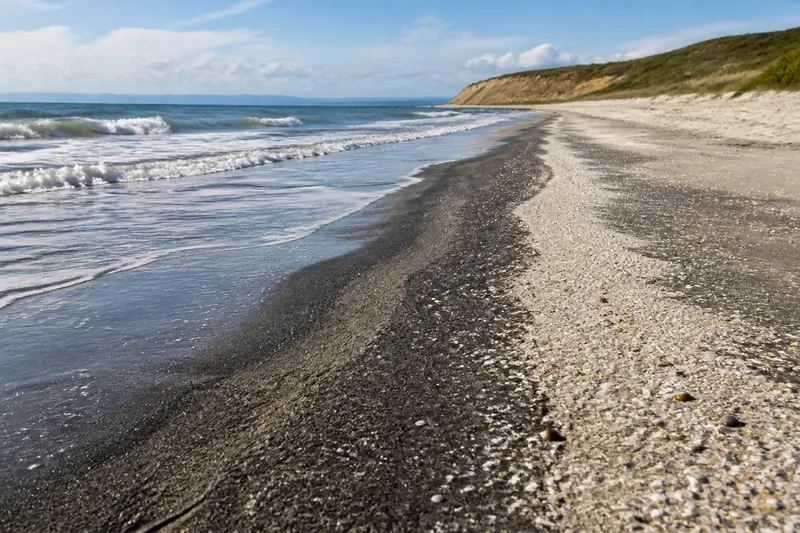
Stand where you can see several parts of the shore at once. Use the first page for a quick outline: a low horizon, the sweep of a bay, a headland, a band of wet sand, perhaps a breakwater. These are not details to perfect. They give later observations a location.
Add a few words beside the sketch. Note whether the light is flat or sharp, where the wind seems to come from, and whether the surface looks damp, ridged, smooth or broken. Such notes are useful because a pencil line cannot retain every distinction between a shadow, a wet patch and a change in material.
Choose one small area within that larger view. A few minutes spent looking at a narrow patch often reveals more than trying to draw the entire shore at once.
Follow visible patterns
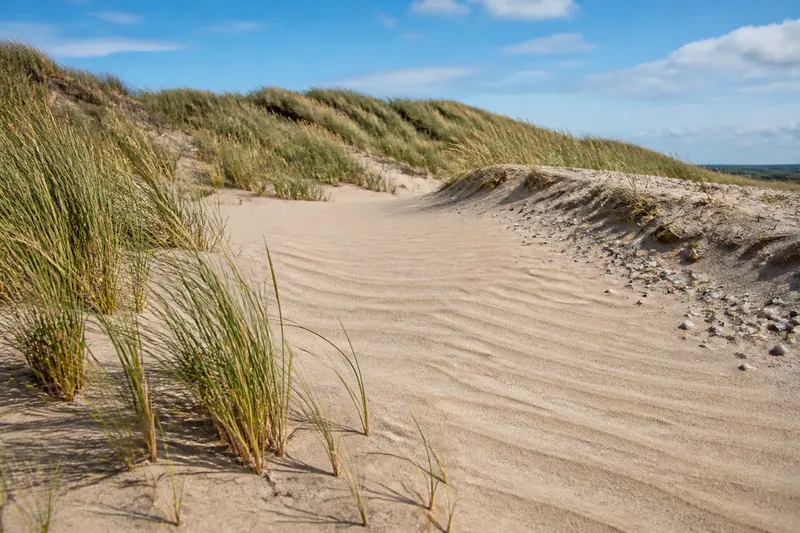
Look for lines and repetitions: parallel ripples, a scattering of pebbles, a ragged edge of foam, or a trail of wrack left above the water. Sketch the direction of a pattern with light strokes before adding individual marks. If the line bends or breaks, let the drawing do the same.
Texture can be suggested rather than copied. Short, irregular marks may describe rough rock; soft shading can show a damp hollow; open paper can stand for a pale, smooth surface. Leave uncertain details unlabelled. A careful question—“Are these small ridges or shadows?”—is more honest than a confident guess.
Notice what sits beside what. A line of darker sand may meet lighter grains; a rock may cast a shadow over a shallow pool; seaweed may gather where the shore’s shape catches it. Record the relationship, not just the object.
A visit in practice
Imagine that Mara arrives at a sheltered cove on a breezy afternoon. She has a pocket notebook and a pencil, and sees a curved strip of wet sand beneath a low rock shelf. Rather than pick up a shell to inspect its markings, she draws its visible outline where it rests, then adds the darker patch of sand beside it and a few short lines showing the direction of the wind-shaped ripples.
She pauses to compare the sketch with the view. The shell’s edge is partly hidden, so she leaves that section open instead of inventing its shape. In the margin, she writes that the nearby rock is wet and that a narrow thread of foam lies just below the shelf. Before leaving, she adds a small arrow for the breeze and a note that the waterline appears to be changing during her visit.
The resulting page is not a portrait of one shell. It records where it was, what surrounded it, and which details Mara could actually see. That distinction is useful: a collection separates an object from its setting, while a sketch can preserve the setting without removing anything.
When is a detail worth recording?
Should I draw every object?
No. Choose details that help explain the shape or character of a place, such as a repeated mark, a boundary or an object’s position beside another feature. A few selective lines often communicate more than a crowded page.
What if I cannot identify a material?
Describe what you can observe: colour, apparent texture, position and whether it looks wet or dry. A note such as “dark, tangled strands above the water” is more useful than a label you are unsure about.
Can I use a photograph as well?
Where photography is permitted, a photograph can help you remember the larger arrangement, while the sketch records what caught your attention. Keep both tools secondary to looking, and avoid approaching wildlife or restricted ground for a better angle.
How do I keep the page useful later?
Add a place name if known, the general time of day, and a brief note about the conditions. A simple plan-view mark or arrow can show where a feature sat in relation to the water or nearby rocks.
Leave the page open
Before walking on, look back at the site and check that your notes distinguish observation from interpretation. “Curved line of dark material” describes what is there; “storm debris” suggests a cause you may not know. The distinction makes the sketchbook a better record and leaves room for another visit to change your understanding.
Close the book only after taking one final look at the wider shore. The quiet-shore sketchbook works best when it carries home your attention, not a piece of the coast; keep the page available for later comparisons, and let the next visit add a different set of patterns.