The Making of a Salt Marsh: From Mudflat to Plant Community
Salt marsh formation begins on sheltered mudflats. Learn how tides, sediment and pioneer plants shape the habitat, and what keeps some ground bare.
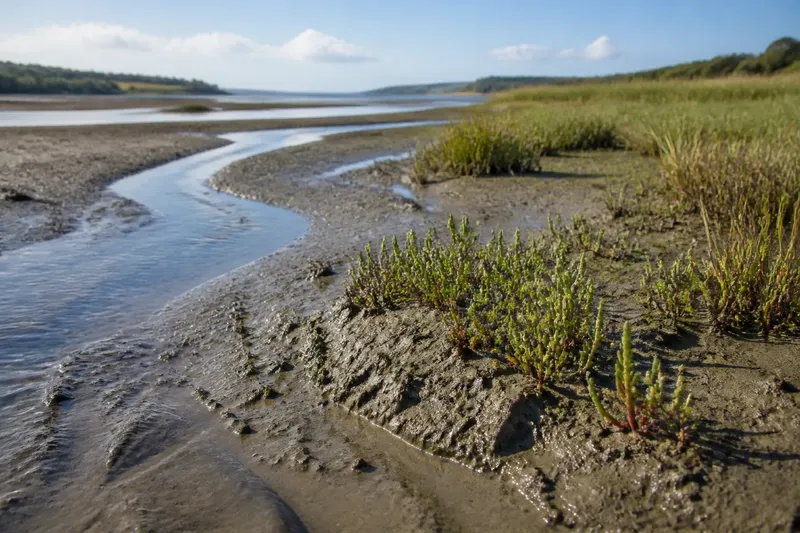
At low tide, a sheltered creek leaves a slick of fine mud exposed, marked by shallow channels and the tracks of feeding birds. Salt marsh formation can begin on this ground, but a mudflat does not turn into meadow on a fixed timetable. Sediment must settle and stay, and young plants must withstand the returning tide.
The change is not simply a matter of waiting for green shoots. It depends on how water moves through a place, where sediment accumulates and which plants can persist under local conditions.
Sheltered ground
Salt marshes often develop beside estuaries, tidal creeks and other protected shores where wave action is limited. A headland, island, spit or river bend may shelter intertidal ground. In calmer water, fine particles have more opportunity to settle, though the mudflat remains part of an active tidal system.
Each tide brings in and carries away water and sediment. Some particles settle as the flow slows; others leave with the ebb. The balance varies with sediment supply, shore shape and the movement of tides and storms. A flat may build in one place while a nearby channel continues to scour its bed.
Shelter slows disturbance; it does not stop it. Mud alone is not evidence that marsh plants will take hold.
What the mud reveals
Before vegetation appears, the surface can show how water crosses it. Fine, soft sediment may hold shallow drainage marks, while firmer patches may remain exposed longer between tides. Small ridges, pools and creek edges create different conditions within a short distance. A seedling’s prospects depend on where it lands, not just on the general character of the bay.
Ground that is exposed between tides can give shoots time to grow. Prolonged inundation and moving water may dislodge them. Salinity, drainage and sediment texture also influence which plants persist. The transition is patchy: bare mud can sit beside isolated shoots, and those shoots may stay sparse.
At the edge of a marsh, the shape of a creek and the position of small pools can explain why vegetation follows an uneven line. A channel may keep one strip open while slightly raised ground nearby offers a foothold.
Sediment and stems
Fine sediment is not spread evenly over a flat. Water carries particles into sheltered places, where slower flow lets some settle. Once vegetation is established, stems and leaves can slow water close to the surface and catch suspended material. Roots and underground stems can also bind sediment, helping a plant-covered patch resist everyday movement.
These influences may reinforce one another, but they do not make a marsh immune to erosion. Strong flows can cut channels through vegetated ground, and storms can remove or redistribute sediment. The shape of a marsh reflects both the material arriving and the forces that keep shifting it.
Imagine a sheltered creek margin with scattered seedlings above a bare, frequently flooded hollow. If the seedlings survive repeated tides, their stems may slow water locally, allowing fine particles to gather around them. The expected visible result is a more uneven surface near the surviving plants, while the hollow may remain bare.
Early colonisers
Plants on the lowest parts of a marsh must tolerate regular flooding and salty conditions. In many temperate salt marshes, glassworts and cordgrasses are familiar examples, though species vary by region. Some colonisers arrive as seeds; others spread from nearby vegetation. Local flooding, salinity and sediment conditions determine which can persist.
Early growth may appear as scattered shoots, small clumps or narrow bands beside channels. These plants can trap sediment and soften water movement near the ground, while their roots help hold the surface. As the ground changes, the habitat may become suitable for other plants. Higher or better-drained areas can support a different mix from frequently flooded margins.
A bare patch is not necessarily a sign of failure. It may be too low or exposed for plants to establish, or it may simply be at an earlier stage in a gradual transition.
How to read change?
Does every mudflat become a salt marsh?
No. A mudflat may remain bare if flooding, erosion, limited sediment or exposure prevents plants from establishing. Mudflats also remain valuable habitats in their own right.
Why do plants grow in patches?
Small differences in elevation, drainage, salinity and water movement create varied growing conditions. Shoots that settle in a suitable spot may persist while nearby ones do not.
Can vegetation stop erosion?
Plants can help bind sediment and soften water movement close to the ground, but they cannot prevent all erosion. Channels, storms and shifts in sediment supply can still reshape vegetated marsh.
What signs suggest marsh is developing?
Persistent plant clumps, sediment gathered around them and changing patterns of bare ground can all be clues. A single tide cannot show whether those changes will last.
Forces that shape timing
Marsh development depends on several conditions acting together. Sediment supply affects whether the surface can build; tidal flooding controls how often plants are submerged; and wave exposure influences whether shoots and loose material stay in place. Freshwater inputs, salinity and local drainage add further differences. A change in one condition may affect patches unevenly across the shore.
Human alterations can also matter. Sea walls, dredged channels and culverts may alter sediment pathways or leave less room for marsh to shift inland as sea level changes. Their effects depend on the site, so a simple comparison between nearby shores can mislead.
Access rules and conservation guidance are site-specific. Follow local signs and management advice rather than entering the marsh to inspect it closely.
Understanding the transition
A mudflat is not a blank space awaiting plants. Tidal water sorts, deposits and removes material, while small differences in the surface create opportunities and limits for colonisers. Where plants persist, their stems and roots can alter local conditions; elsewhere, channels and frequent flooding may keep the ground open.
Salt marsh formation is best understood as an uneven relationship between sediment, water and vegetation, not a tidy march from mud to meadow. The contrast between a plant-covered patch and a bare channel edge can reveal how this particular shore is changing, and why some ground supports a plant community while neighbouring mud remains exposed.